Tuesday, March 9, 2021
Review: The Only Good Indians by Stephen Graham Jones
As a Coloradan, I often look forward to the work of horror writer Stephen Graham Jones. His latest, The Only Good Indians (Gallery/Saga Press), is a worthy entry that brings us into collision with the natural world. And anyone who’s tried to debug an electrical problem in the house will immediately be sucked right in.
Ten years in the past, a group of Blackfeet teens stumbles upon an elk herd that is easy pickings. They slaughter many, even though it’s an illegal kill and they haven’t a way of bringing all that meat home. Now the vengeful ghost of a pregnant cow comes back to harrow them.
As bad goes to worse (think "Cabin in the Woods"), Jones’s book touches on many issues, both historical and scientific.
I was reminded of the Magnetic Fields song, “Fear of Trains,” with its haunting litany of difficulties faced by Native Americans throughout our history
We are also reminded to coexist with wildlife. I just came across an ongoing study by Colorado Parks and Wildlife to study survival rates of calves under a year old among herds across the state, focusing on how human recreation may be influencing the behavior of elk. There’s a weird but fun story in the Colorado Sun about transporting pregnant elk via helicopter!
If you’re in Colorado in the fall, a real treat is to admire (from a remote, respectful distance) the “bugling” of the elk in Rocky Mountain National Park, as the rutting season begins.
At Third Flatiron, we featured a great story about mass hunts from trains in our weird western themed Principia Ponderosa anthology. The author of that story, “The Hunt,” Salinda Tyson also invoked a Servant spirit that preserved the balance between the human and the natural. If you liked Jones’s story, check out Tyson’s story here.
The Only Good Indians is a finalist for the Ray Bradbury Prize for Science Fiction, Fantasy & Speculative Fiction and is available on Amazon.
Tuesday, January 5, 2021
Racism Is Not a Family Value
Originally published November 2009
My daughter, a recent graduate in Cultural Anthropology, praised in particular a course on Zora Neale Hurston, an American folklorist, novelist, and authority on black culture, taught by Professor Lorecia Kaifa Roland of the University of Colorado Boulder. Raised as I was in lily-white suburbia, I had never heard of Zora. She was "rediscovered" by Alice Walker. But it turns out that one of Zora's best friends was Fanny Hurst, another famous novelist writing about black life. Hurst's novel, "Imitation of Life," was one of the defining "experiences" of my life, even though I never read the book. During your life, if you have children, you try to share your values and reasons for those values. I had shared the story with my daughter that I had joined the YWCA, one of the oldest women's organizations in the United States, not because I was a Christian, but because one of their basic tenets was to get rid of racism. Somewhere along the way, the YWCA felt this goal was no longer necessary and dropped it from their principles and practices. At the time, I was very upset about this and felt it was premature. I'm happy to say that it is now back (http://www.ywca.org/site/pp.asp?c=djISI6PIKpG&b=284783). My daughter and I didn't know we had these inspirational novelists in common, but for me it was exciting to see her discover and internalize an experience so different from her own privileged upbringing yet so important to our society today. "Imitation of Life" was made into two films, one in the late 1930s and another in the 1950s. I saw the 1950s version first. The story involves a black woman raising her light-skinned daughter while working as a servant for a strong white woman entrepreneur. The daughter, even as a young child, wants to be white and denies that she is "colored." When she grows up, she abandons her mother and gets as far away from her as possible, passing herself as white. She lives in constant fear of being discovered. Her mother is resigned, even comfortable, with her identity and never understands why her daughter rejects her race and her mother's love. There have been many other fantastic stories about mother/daughter betrayal, notably "Mildred Pierce" and "The Piano," but "Imitation" contained the double edges of blood kin betrayal and racism, a potent combination that I found life-changing.
Tuesday, November 10, 2020
Editor's Note: Brain Games: Stories to Astonish
Life's become something of a shifted chessboard, hasn't it? My gang has worked hard to put together the Fall/Winter 2020 edition of Third Flatiron Anthologies, a huge issue with 27 short scifi, horror, and fantasy stories. The theme of Brain
Games: Stories to Astonish focuses on
puzzle solving and ingenuity, inverted tv tropes, inventions (clockwork,
practical, or Rube Goldberg), masterful creations, mythology, and social commentary. A
number of these tales cross over to the dark side, in keeping with the season,
and our final short story ushers us into the winter holidays. (Note the young Santa at work on the cover.)
We open with an odd space mystery, as asteroid miners try different theories about who stole their Earth shuttle. Brian Trent gives us "Theft, Sex, and Space Pirates."
Further bending our minds, Geoff Taylor gives us "Killer dApp," software scifi that presents a completely evil yet plausible way to take advantage of anonymous cryptocurrency (hey, kids, don't try this at home). Jetse de Vries dishes out Japanese AI warrior scifi, with embedded poetry.
With the coronavirus playing havoc with people's smellers, it could be important to keep our noses in tip-top health. Two of our stories disagree on what space aliens smell like. Alyce Campbell is pretty sure they smell garlicky ("Kwatt Games"), while Brenda Kezar speculates that they smell like patchouli ("US Portal Service"). Maureen Bowden dips into "The Sweet Smell of Sheep" to tell the story of the Trojan War from Paris's ex-wife.
As we are encouraged to stay in our homes and socially distance ourselves, mail delivery becomes an even more important daily service, not to mention that postal service is a pillar of civilization. We're not so sure a quantum portal would be a good replacement. Rebecca Fung posits that Santa might agree with us, as he gets all his toy ideas from kids' letters, in "The Greatest Toymaker in the World."
Artificial intelligence, androids, and robots seem to be on a lot of people's minds. That is, do they have minds like us? Henry McFarland describes some "Perfectly Rational Gamblers," and their frequent visits to casinos, while C. J. Peterson writes the code that would determine whether two supercomputers have achieved self awareness (hilarity ensues). But could we be living in a computer simulation? In Paula Hammond's "All Your Bases Yada-Yada," a woman discovers what seems like a glitch in the pixels on the way to work. It's a bittersweet symphony. Although they didn't have 3-IN-ONE oil back in Medea's day, she helps out Jason and the Argonauts against a giant robot that's prone to rust, in Jenny Blackford's "A Bronze Giant to Guard Her."
For you players of games: A cop in training gets too comfortable living in virtual reality in Jess Hyslop's "Softlock."
Intelligence different from our own may arise from Nature, as Ellen Denton reminds us, in "Minds Unseen."
We hope to rely on good old-fashioned human ingenuity to get us out of scrapes like deadly viruses. Let's see what the Nobel Peace Prize address in "Stockholm, 2066" might be, as told by Joseph Sidari. And we wonder what Graham J. Darling is referring to in his comical postapocalyptic tale, "The New Season." Is it the new flu season, or the election season? And which is scarier?
Lisa Timpf shows us it's possible to do our shopping without all of today's "helper technology," in "The Disconnect."
Halloween season wouldn't be complete without some horror tales. Eleftherios Keramidas's sorcerer just can't resist applying the latest technology to outsmart a deadly magical book, in "Toxic." Monica Joyce Evans's "Forced Teaming" discusses the cons of a job holding the digital copies of dead human personalities. For some Frankensteinian steampunk, Dennis Conrad's "The Incredible Machine" sucks the life out of us. Otherworldly calls come in through a village's outdated switchboard in David Rogers's ghostly "Numbers." In M. Richard Eley's "Bad Connection," a hacker gets his just comeuppance when he Zoom-bombs the wrong meeting.
To spice things up, Justin Short offers "Mock Me Amadeus." (It's a graveyard smash.) Dominick Cancilla recounts the adventures of "Joey and Rue," a riotous mashup of demons and Rube Goldberg, while M. K. Hutchins writes an empathetic tale about getting on the Grim Reaper's good side in "Upcycling Death."
As usual, we conclude with the flash humor section, "Grins and Gurgles." If you're fed up with the constant pillow guy commercials, Steve Zisson tells us how to DIY your own. Aidan Doyle channels his lovable evil villain to lecture his minions in "To All the Creatures I've Hid from Ethics Committees," and Lauren Lang's lingerie model suffers the discomfort of outer space to find "The Best Bra for the Boobs."
Brain Games: Stories to Astonish is available in eBook on Amazon (free for Kindle Unlimited subscribers), and there's a paperback edition.
Friday, August 21, 2020
Science Fiction Goes Virtual
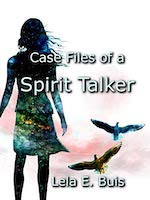
Case Files of a Spirit Talker by Lela E. Buis - Review
Tuesday, June 9, 2020
Gotta Wear Eclipse Glasses - Note from the Editor
Wednesday, April 1, 2020
A Little Hatred - Review
Joe Abercrombie's A Little Hatred gets off to a slow start. This appears to be the beginning of a "Game of Thrones"-size, multibook grimdark epic littered with dozens of characters (and requiring frequent consultation with the appendix).At first glance, some of the major characters are downright despicable, such as the money-hungry businesswoman Savine dan Glokta, whose factories exploit the workers. (Savine is certainly no Daenerys Targaryen, more like Cersei Lannister.) Or Leo dan Brock, aka "The Young Lion," who seems to be a spoiled ne'er-do-well of a knight not worthy of our respect, and the enormous and cruel henchman Pike (guest starring in the role of The Mountain). Rikke, a young woman of the North with the "gift" of the Long Eye, has trouble getting her shit together in between chillingly prescient visions.
But after about 100 pages or so, things begin to pick up, as the worlds the characters inhabit begin to congeal. Abercrombie's creation is a blend of medieval history, Viking mythology, and 18th century industrial revolution. When it veers into the medieval, in a Battle of Hastings-like showdown, for example, pages began to turn. Not that I like arrows in the eye, or duels to the death, of course, but it is pretty exciting to try to figure out who to root for and worry whether they are about to die. Abercrombie knows how to write a thrilling climax.
The book's long, though. It's lucky that our local library shut its doors for social distancing and forgave all late fees. Or, you can buy it on Amazon.com.
Recommended.
Tuesday, December 17, 2019
Under Darker Suns: Review
Sargent Gary Cooper is a tough Earth Alliance non-com who's been busted in rank more than once for using his own judgment, and re-promoted for being the last survivor of a mission gone wrong. His exploits are the remnants of diaries discovered by the AI archivist, Polyakov-241, recounting some of the events preceding what's called
"The Fall."
My favorite "Star Light" novella was "The Long Night of Wilhelm Reich," a weird trip, in which Cooper's team is sent to rescue a shipload of colonists stranded in space. What begins as a routine boarding turns into a spooky sabotage-laced hunt for the disappeared colonists and a pulse-raising battle against an energy-sucking entity created by an orgone device. What's that, you ask? Check out the bizarre theories of Wilhelm Reich (a real person) in wikipedia or Martin Gardner's classic "Fads and Fallacies in the Name of Science," and you'll understand.
I highly recommend Under Darker Suns: Star Light. The ebook is available on Amazon at https://www.amazon.com/dp/B07TVR63R5. Also available in paperback.